Man Cut Off All Contact With His Mother-in-Law After She Showed Up Unannounced and Refused to Leave for Days
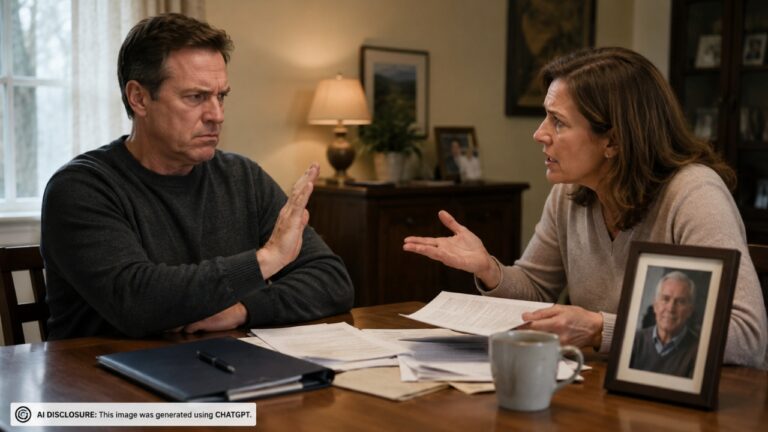
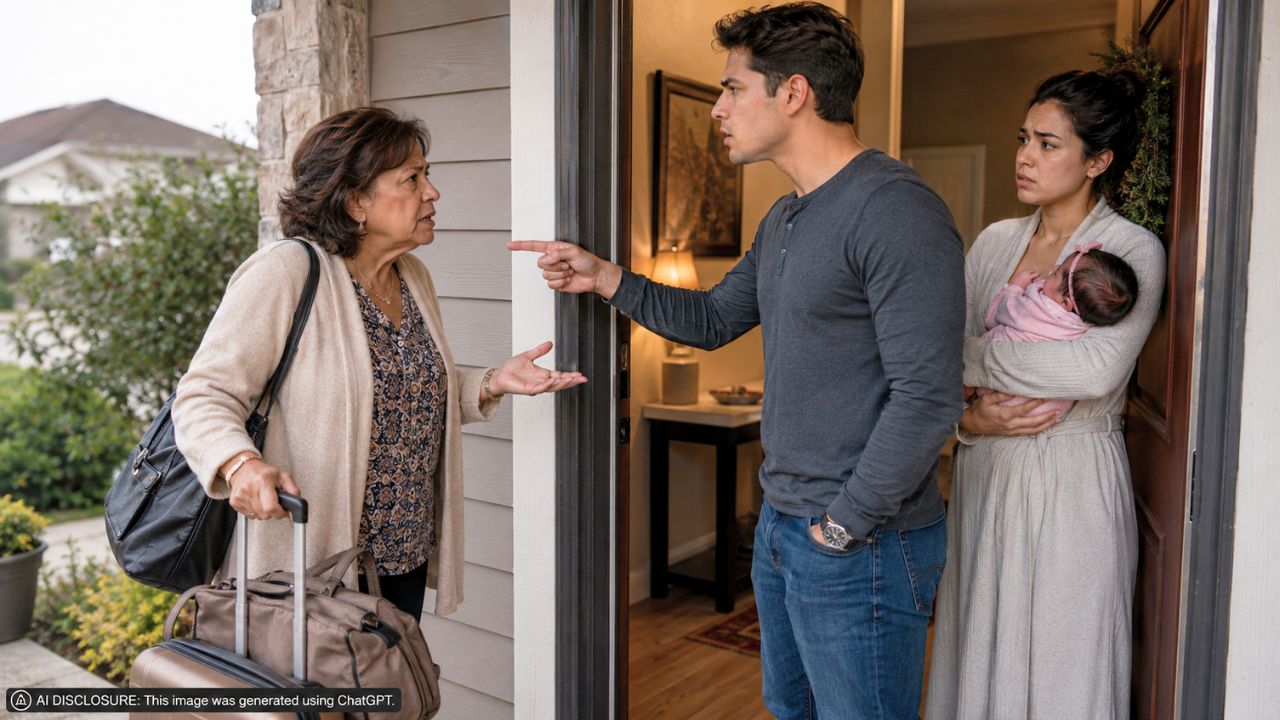
Photo credit: AI-generated image created using ChatGPT. Illustrative only.
Two months after giving birth to her first child, a 26-year-old new mom says her relationship with her mother-in-law went from “best relationship” to total cutoff in a matter of days. It started in the hospital, escalated into family-wide blowups, and ended with the mother-in-law showing up at the couple’s home uninvited and causing a scene.
In the original post, the woman explains that she and her husband (27) welcomed a daughter in October 2022 and had already chosen a name loaded with meaning: Stori Noelle James. “Noelle” was her late mother’s name—something she’d wanted for years after losing both parents in a car crash when she was 15.
The name choice felt settled—until the hospital conversation
During pregnancy, the mother-in-law seemed fully on board. The baby would be the first and only grandchild, the poster said, because her brother-in-law and sister-in-law don’t want kids and the couple plans to have only one. The mother-in-law was involved and supportive, even helping pick out the first name.
Then labor hit suddenly—at work. The poster went to the hospital, her husband and mother-in-law met her there, and she asked her mother-in-law to be in the delivery room as a second support person.
The delivery didn’t go as planned. She ended up needing an emergency C-section after not dilating, and afterward she was exhausted and unwell. When her husband went home to grab necessities, the mother-in-law stayed behind to watch the baby while the new mom tried to sleep.
That’s when the hospital staff woke her up with a stunning question. A nurse told her she’d “expressed concerns about changing your daughter’s middle name.” The poster says she had no idea what the nurse was talking about—until her mother-in-law jumped in and argued that the baby should have her middle name, “Marie,” because she was the one who had been there “supporting” her.
A line was crossed when her late mother was brought into it
The poster says the exchange went from uncomfortable to deeply personal fast. When she didn’t immediately agree, her mother-in-law allegedly pointed at the baby’s existing middle name—Noelle—and made a remark implying it didn’t make sense because the poster’s mother “was not even here to support you.”
For a woman who lost her parents as a teen, it landed like a gut punch. She says she started crying, then told her mother-in-law to get out and not come back, saying she couldn’t believe she would speak that way knowing her mother had died.
She immediately called her husband in tears. He initially struggled to believe it, she said, because his mother “is not that type of person.” But the nurses confirmed the story, and he apologized and acknowledged how painful it must have been to hear.
In those first hours after delivery—when paperwork, recovery, and bonding are already intense—the fight wasn’t just about a name anymore. It was about power, grief, and someone attempting to rewrite a child’s identity while the mother was medicated, exhausted, and vulnerable.
Discharged from the hospital, the family conflict followed them home
Two days later, after the couple went home, the next wave hit: angry messages from the husband’s siblings. The poster says her brother-in-law and sister-in-law texted that she was wrong for kicking their mother out, framing it as the mother-in-law simply trying to “make me more comfortable.”
According to the post, the sister-in-law escalated the fastest, sending a threatening message and accusing the poster of insulting her mother. The poster believed her mother-in-law had fabricated what happened in the hospital to make herself look like the victim.
This is where the husband stepped in. The poster says he took the phone, told his siblings what really happened, and they immediately apologized once they heard the version that matched what hospital staff had witnessed. The sister-in-law reportedly cried and expressed regret.
For a moment, it seemed like the worst of it might be over. Three days later, the siblings came to meet their niece, and the visit went well—until the mother-in-law arrived unannounced.
The unannounced visit turned into a doorstep scene
About 30 minutes into the visit, the mother-in-law pulled up without warning, the poster wrote. The new mom grabbed her baby and went upstairs, making it clear she didn’t want contact.
Her husband answered the door and laid down a boundary: his mother was not allowed in the house or around the baby until his wife felt comfortable. The poster says his mother “quickly caused a scene” at the front door.
Eventually, the brother-in-law and sister-in-law calmed her down and she left, but the message was already delivered: even after being removed from the hospital room, she was willing to show up anyway and push past the couple’s wishes.
After that, the poster describes a stream of rude texts and phone calls that didn’t stop—some of them referencing her mother. That was the breaking point. She decided to cut off all contact with her mother-in-law entirely, telling her husband he could choose his own relationship with his mom, but she was done.
Her husband’s response was decisive. He told her that she and their daughter were his family now and he would do what it takes to protect them.
What people around her focused on: boundaries, access, and receipts
In the poster’s real-life circle, most people backed her up. Her grandmother and friends told her she wasn’t wrong and said they were proud she stood her ground.
But one close voice made her second-guess herself: her best friend. The friend argued she was handling it wrong, mainly because this baby would be the mother-in-law’s only grandchild. That comment stuck in the poster’s head, raising the fear that enforcing a boundary could permanently fracture the extended family.
At the same time, the pattern she described—trying to change a child’s name while the mother was recovering, spreading a false story to relatives, then showing up unannounced and making a scene—left very little room for “just give it time” optimism. In stories like this, the practical concerns people tend to focus on are access and documentation: who is allowed around the baby, what gets saved in writing, and how quickly a boundary turns into repeated attempts to override it.
Even without any mention of police or formal legal steps, the couple’s approach shows a familiar playbook: one parent handles their side of the family, boundaries are stated clearly at the door, and contact gets reduced when communication turns hostile. The husband’s willingness to back his wife publicly—first with the siblings, then at the front door—also changed the power dynamic his mother seemed to expect.
The hard part now is living with the boundary, not just setting it
The poster isn’t asking whether the name should change. That part is settled: the middle name honors her late mother, a promise she’d held onto since childhood. The real question is whether cutting off contact is too extreme when the mother-in-law was otherwise a major presence during pregnancy—and when this will be her only grandchild.
But the poster’s timeline makes clear why the cutoff happened: it wasn’t one comment. It was the attempt to alter the name behind her back, the cruel remark about her mother’s absence, the alleged misinformation sent through the family, and the unannounced appearance at their home followed by ongoing harassment.
Now, the couple is left managing a reality a lot of new parents recognize: the postpartum period is already fragile, and conflict doesn’t stay theoretical when someone shows up at your door. For this family, peace seems to depend on one thing—whether the mother-in-law can respect that the baby’s parents, not the extended family, control the boundaries.
Check out more from Now Rundown:
- A Party of 12 Came Back a Month Later Demanding Their $80 Tip Refunded — My Restaurant Made Me Pay It
- Her Coworker Kept Filing the Same Complaint About Her After Being Warned — Then She Filed a Counter-Report With Every Email Documented
- Siblings Demanded Half of Their Sister’s $11 Million Inheritance — She Refused Because They Never Visited
- The Kid I Bullied in Middle School Just Interviewed for a Job on My Team — He Bombed It and I Didn’t Hire Him

Abbie Clark is the founder and editor of Now Rundown, covering the stories that hit households first—health, politics, insurance, home costs, scams, and the fine print people often learn too late.