My Wife Leaves Our Kids With the Neighbor But Won’t Let Me Watch Them Alone for an Hour
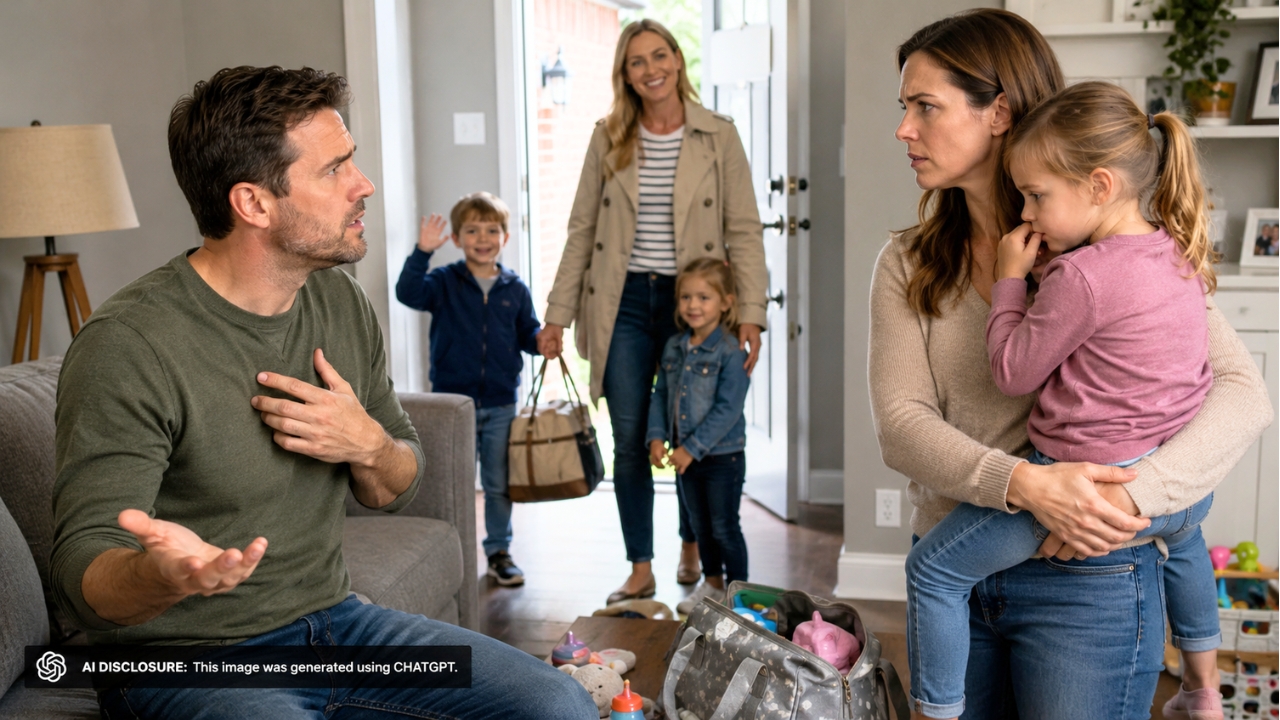
Photo credit: AI-generated image created using ChatGPT. Illustrative only.
In this house, the most exhausting fight of the day starts before sunrise. A dad who’s spent months as the primary caregiver for his 10-month-old says he can handle diapers, naps, meals, baths, and job hunting on little sleep. What he can’t handle anymore is being overruled at 4 a.m.—and then being left to deal with an overtired baby for the rest of the day.
He laid out the growing standoff in the original post, describing a marriage that’s mostly aligned on values but stuck in a daily loop of early-morning panic, resentment, and burnout. His wife, he says, is deeply responsive when their son fusses. The dad thinks some of that fussing is just normal sleep-cycle noise and that stepping in too quickly is training the baby to wake up earlier and earlier.
Now they’re arguing almost every day, and the stakes aren’t theoretical. This is the hour that decides whether the baby gets more sleep, whether mom gets more sleep, and whether dad starts the day already running on fumes.
How they ended up in a one-parent-plus-one-parent household
The dad describes a year that has been anything but stable. Both parents started out on leave, then went back to full-time work. When childcare wasn’t affordable, he worked remotely while caring for the baby at home—an arrangement that’s notorious for grinding people down even under ideal circumstances.
Then came the job losses. He lost his job in June and became the full-time parent with “no outside support,” managing childcare, job hunting, and his mental health at the same time. He briefly found work, which made daycare possible, but he lost that job in November and returned to being the primary caregiver during the day.
His wife works full time and sees their son mainly in the mornings and evenings. He says she is loving and emotionally attentive, shaped in part by a difficult childhood and a fear of being a “bad mom.” He respects that, but he also says it’s colliding with the reality that he’s the one holding the schedule together hour by hour.
Life with a clingy 10-month-old doesn’t leave much room for error
On a typical day, he says he handles naps and bedtime, meals and snacks, playtime, outings, baths, and most house chores—while also searching for work. Their baby is crawling, teething, clingy, and close to standing, which means constant supervision and constant effort. It’s not a stage where you can simply “push through” a rough day without paying for it later.
That context is why the early-morning calls matter so much. If the baby gets up too early, the whole day becomes triage: more fussiness, more difficult naps, and more strain on the caregiver who is already stretched thin. In his telling, the sunrise decision isn’t a minor disagreement—it sets the tone for every hour that follows.
And it’s happening during the part of the day when tempers are shortest and everyone is least capable of having a calm, reasoned discussion.
The flashpoint: 4 a.m. fussing and two very different instincts
The dad says their son often wakes between 4 and 6 a.m., sometimes with gentle fussing or partial wakeups. His wife’s instinct is to get the baby up immediately as soon as she hears him. His instinct is to wait—at least briefly—because he believes many of these moments are normal sleep transitions where the baby can resettle on his own.
He’s careful to draw a line: he says he doesn’t ignore distress. If the baby escalates to “true panic/distress,” he intervenes. But because he’s been the primary caregiver for much of the year, he believes he can tell the difference between a partial wake and a full wake.
In his view, rushing in every time teaches the baby that early morning is playtime, not sleep time. In her view, not responding immediately feels like failing their child. She takes his pushback personally, he says, and hears it as him telling her she’s a bad parent.
That’s how a simple question—“Should we give him a minute?”—turns into a referendum on someone’s identity.
What makes it feel unfair: she wakes him up, then goes back to bed
The part that’s hardened his resentment is the handoff that follows. When she insists the baby should be up, he says she often goes back to sleep. That leaves him managing the rest of the day with a baby who is now awake earlier than usual and, as the hours pass, more overtired.
He describes it as decisions being made “in the hardest moments,” with the consequences landing on him. If the baby is cranky, it’s dad who has to coax naps, keep him regulated, and power through chores and job searching without any relief.
It’s also an emotional trap: if he complies, he’s exhausted; if he resists, he’s accused of being uncaring. That’s the loop they can’t seem to break. He says they’re now arguing almost daily, and he feels both exhausted and resentful—yet also stuck trying to respect his wife’s parenting while protecting his own ability to stay calm and functional.
Because once the primary caregiver is dysregulated, the baby’s day gets harder too. That’s the practical reality underneath the couple’s moral disagreement.
Where people said the real issue might be hiding
In responses to the dad’s question about whether he was wrong to stand his ground, the biggest focus wasn’t just sleep training versus responsiveness. It was the imbalance of labor and authority: one parent spending most of the day doing the work, while the other parent gets veto power during the most sensitive moments.
Some people zeroed in on the wife’s anxiety and fear of being a “bad mom,” pointing out that intense reactivity can feel like love but still create chaos when it overrides routine. Others pointed out that the dad’s unemployment doesn’t make him “available” 24/7; it just means he’s doing unpaid labor plus job searching, without the predictable breaks that paid work sometimes provides.
And many emphasized the same practical point: if the baby is truly awake and distressed, respond. If it’s a normal resettling fuss, jumping in immediately can backfire, especially if it consistently leads to a sleep-deprived caregiver carrying the entire day.
In other words, the crowd didn’t just treat it as a parenting philosophy fight. They treated it like a household operations problem that’s tipping into burnout.
The tension they still have to live with tomorrow morning
Nothing about this dispute resolves itself on its own, because the baby will wake up again, and the morning will feel urgent again. The dad is trying to set a boundary around what he sees as sustainable caregiving: letting the baby attempt to resettle, stepping in when it becomes real distress, and not creating a pattern of earlier wakeups that wreck the day.
His wife is trying to protect their son—and maybe also protect herself from the fear that any delay equals neglect. Those two motivations aren’t malicious, but they are colliding in a way that leaves one parent feeling powerless and the other feeling judged.
For now, the family is stuck in a routine where the day’s first decision is also the day’s first fight. And in a home already strained by job loss, nonstop childcare, and a baby in a demanding stage, even one hour can feel like the difference between coping and falling apart.

Abbie Clark is the founder and editor of Now Rundown, covering the stories that hit households first—health, politics, insurance, home costs, scams, and the fine print people often learn too late.