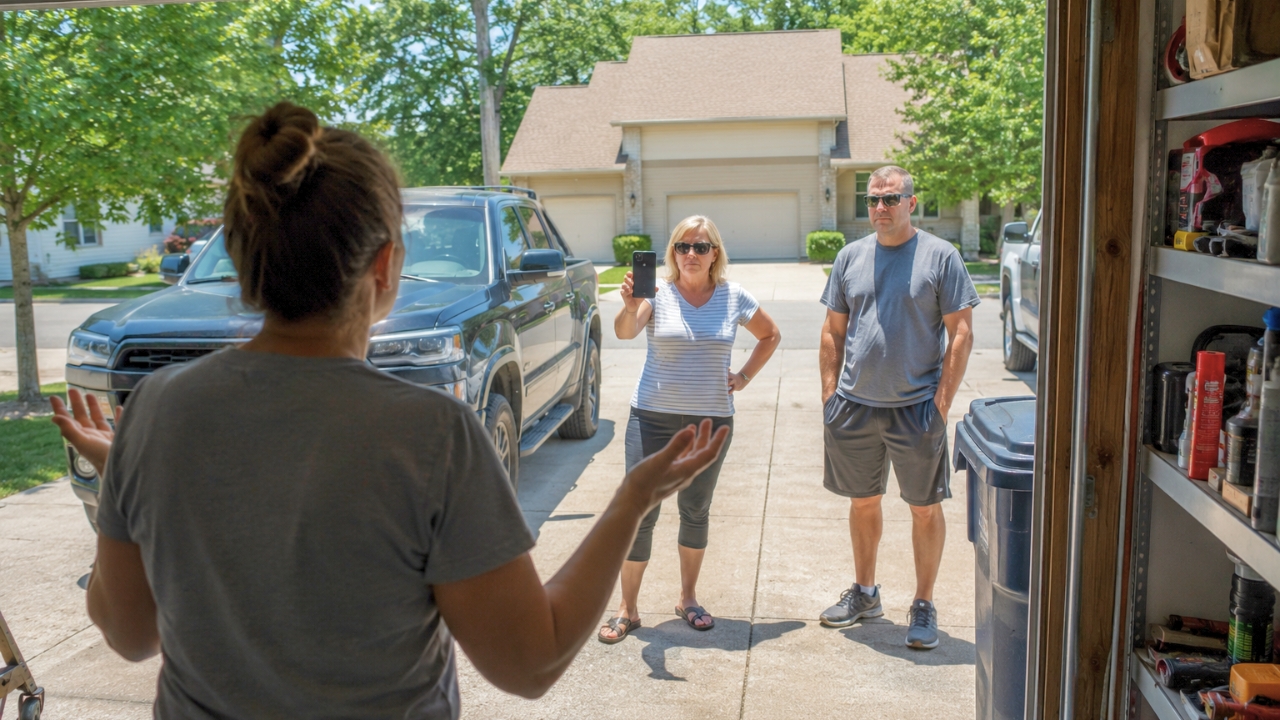
Neighbors Entered Garage and Driveway, Refused to Leave, and Started Recording
A homeowner said an already tense neighbor situation escalated when the neighbors allegedly entered their garage and driveway, refused to leave, and started recording the confrontation instead of backing off.
The homeowner shared the situation in a post on r/legaladvice, explaining that the problem involved neighbors coming onto their property without permission. According to the post, the neighbors were not simply standing on the sidewalk or speaking from their own yard. They allegedly came into the homeowner’s driveway and garage area, then refused to leave when told to go.
That detail changed the situation from an uncomfortable neighbor disagreement into a property and safety concern. A driveway is already close to home, but a garage can feel even more private. It is often where people store tools, vehicles, bikes, boxes, equipment, and sometimes even house-entry access. When a neighbor walks into that space and will not leave, the homeowner is not only annoyed. They may feel cornered on their own property.
The recording made it worse. The homeowner said the neighbors began filming them, which added another layer of frustration. People often pull out phones during conflicts because they want proof, but recording can also make a situation feel more aggressive. It can turn a normal request — leave my property — into a performance where the person being recorded suddenly worries their words, tone, or reaction will be used against them.
The homeowner wanted to know what they could do legally. Could they call police? Could the neighbors be trespassed? Did recording change anything? What happens when someone enters your garage or driveway and refuses to leave after being told?
Those questions matter because neighbor disputes can quickly become messy when both sides start documenting each other. One person says they were protecting themselves. The other says they were being harassed. One person says they had a right to record. The other says the recording was part of the intimidation.
The homeowner’s concern seemed to be that the neighbors were crossing a clear boundary and then using the camera to make the homeowner look like the problem if they reacted strongly.
That is a hard position to be in. If the homeowner gets angry, the neighbors may have a clip of them yelling. If the homeowner stays quiet, the neighbors may keep pushing. If the homeowner physically blocks them or tries to remove them, the situation could escalate even faster.
The issue also raised a practical question about what counts as trespassing. A neighbor walking onto a driveway once may not always lead to much. But a neighbor entering a garage area and refusing to leave after being told to get off the property is a different situation. At that point, the homeowner wanted to know whether the law would treat it as more than a rude visit.
The post did not describe a clean ending where police came immediately and solved it. Instead, it captured the point where a homeowner realizes a neighbor conflict is no longer staying at the fence line. It is now in the garage and driveway, with phones out and tempers rising.
That is the kind of escalation that can make someone feel like they need an official record before the next encounter.
Commenters told the homeowner that the safest move was to stop arguing in the moment and begin documenting the pattern.
Several people said that if the neighbors entered the property again and refused to leave after being told to go, the homeowner should call police. The advice was not to wrestle with them, block them physically, or try to take the phone away. The cleaner option was to say clearly that they were not allowed on the property and then let police handle the refusal.
Others suggested sending a written notice that the neighbors were not welcome on the property. A written trespass warning, especially if followed by a police report or delivered through proper channels, could make future incidents easier to explain. If the neighbors returned after being clearly told not to, the pattern would be harder to dismiss as a misunderstanding.
Commenters also urged the homeowner to install or adjust their own cameras. If the neighbors were recording selectively, the homeowner needed footage that showed the whole interaction: where the neighbors entered, whether they were asked to leave, how long they stayed, and what happened before anyone raised their voice.
That mattered because phone videos rarely show the full story. They often start after the conflict is already heated. A fixed camera showing the driveway or garage could give a more complete timeline.
Some commenters said recording in a visible area may be legal, depending on the state and whether audio is involved, but that did not give the neighbors permission to stay on private property. The recording issue and the trespass issue were separate. A person may be allowed to record from a public place, but that does not mean they can stand in someone else’s garage to do it.
Others warned the homeowner not to threaten the neighbors, insult them, or get drawn into long arguments. If the neighbors seemed to want a reaction for the camera, the best response was to stay short and repeat the same thing: leave the property.
The post did not end with a restraining order or a permanent solution. It ended with the homeowner trying to figure out how to protect their space without turning the next encounter into something worse.
That is what makes neighbor disputes like this so stressful. The conflict happens at home, in the place where people are supposed to feel settled. A stranger causing trouble in a store eventually leaves. A neighbor is still there the next morning.
Commenters did not tell the homeowner to ignore it. They told them to make the boundary official, document future incidents, use cameras, and call police if the neighbors refused to leave again.
Because once someone steps into your garage or driveway and refuses to go, the dispute is no longer only about hurt feelings or bad manners. It is about whether your property line means anything when the person crossing it has a phone in your face and no intention of leaving.

Abbie Clark is the founder and editor of Now Rundown, covering the stories that hit households first—health, politics, insurance, home costs, scams, and the fine print people often learn too late.