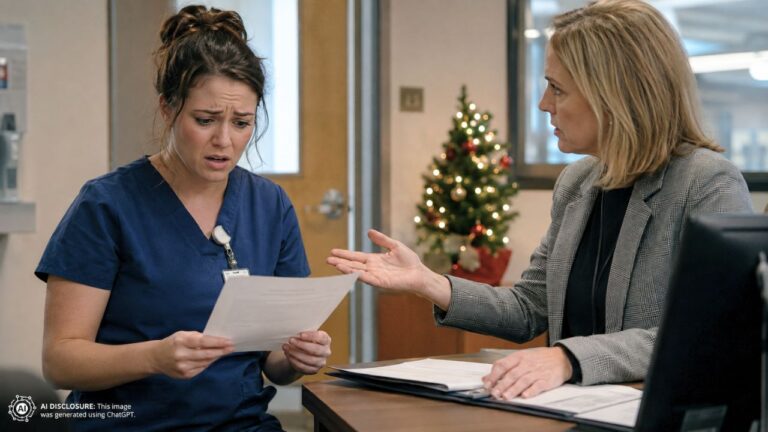
Coworker Said Her Brother’s Death Wasn’t a Tragedy — Then the Truth Came Out at Work
Photo credit: Skynesher/istock.com
A woman who worked with a grieving coworker said she knew the loss was awful. Her coworker’s brother had died suddenly after falling from the roof of his house, and everyone at work seemed shaken by it.
But instead of keeping her judgment to herself, she began fixating on the details.
The coworker, whom she called Aly, had been at work and seemed normal earlier that day. Hours later, her brother Rhett fell from the roof of his home. He was reportedly conscious afterward and thought he was okay, so he did not call emergency services. Later, it turned out he had serious internal injuries, and he died.
The poster said she was shocked and saddened at first. She could not imagine losing a sibling. But as she heard more, she began focusing less on Aly’s grief and more on what she saw as Rhett’s bad decisions.
Why was he on the roof? Why did he not call emergency services? Why did he assume he was fine?
The poster admitted she started seeing his death as reckless and preventable. She wrote that while the situation was unfortunate, she did not think “tragedy” was the right word for it. In her mind, careless deaths did not belong in the same category as other deaths. She also acknowledged that Rhett worked a low-wage job and may have avoided medical care because he feared a huge bill, but she said she did not know if that was really his reasoning.
Even then, she was not asking whether she should say this to Aly directly. She said she would never do that. What she wanted to know was whether it would be wrong to vent about her opinion to coworkers or friends who knew Aly or Rhett.
That distinction did not help her much.
In the Reddit post, commenters overwhelmingly told her not to say anything to anyone connected to the grieving family. They argued that she had inserted herself into a loss that had nothing to do with her and was trying to turn someone else’s grief into a debate about logic, class, and blame.
The poster kept defending herself in comments. She said Aly’s grief was affecting work and that she needed somewhere to vent. She also appeared to believe her “facts” mattered more than other people’s feelings, even though commenters pointed out that her opinion would do nothing except hurt people.
The situation did not stay online.
In later posts, the woman wrote about problems at work. Her supervisor was intimidating, new coworkers seemed to adjust better than she did, and people were allegedly giving her glares. She complained that coworkers did not appreciate how much she did and that people seemed to dislike her.
Eventually, the original comments about Rhett’s death became known at work.
The woman later admitted Aly found out what she had said. She also admitted she had told other coworkers that Rhett should not have been on the roof, that his death was not tragic because he should have called emergency services, and that working a minimum-wage job was not an excuse.
By then, the damage was done.
Aly stopped talking about her family around her. The poster interpreted that as Aly acting like she “wasn’t allowed” to mention them in front of her, which made the poster feel guilty. But from the outside, it sounded more like Aly had learned this coworker was not a safe person to share grief around.
The poster said she eventually apologized to several people, including Aly and Rhett’s family, with mixed results. She admitted she had been out of line and elitist, though even in the update, she seemed unable to fully stop centering herself. She wrote that Aly had become less tolerant of her and that another coworker who never liked her was affecting her life.
She also compared Aly’s life improving to her own social standing going downhill. Aly was happier, coworkers liked her, and the poster felt lonelier and more disliked. She said she had married and was pregnant, but she still felt as though Aly’s life had gone up while hers went down.
That line landed badly with readers.
To many, it sounded as if the poster still did not fully grasp the imbalance. Aly’s brother was dead. The poster still had her marriage, pregnancy, job, and life moving forward. Yet she seemed stuck on how the consequences of her own comments had hurt her at work.
The story became less about one cruel thought and more about what happens when someone confuses being “logical” with being kind. The poster may have thought she was simply analyzing a preventable accident. But at work, those words reached people who had loved Rhett, and there was no way to take them back.
Commenters were almost unanimous that the poster should never have said anything about Rhett’s death to coworkers. Many said grief is not a courtroom where outsiders get to decide whether the deceased person made perfect choices.
A lot of readers were especially bothered by the class angle. The poster admitted Rhett may have feared medical debt but still dismissed that as not enough of an “excuse.” Commenters saw that as cold and out of touch.
Others pointed out that even if a death is preventable, it can still be tragic. People make bad judgment calls every day, especially after injuries when adrenaline, shock, fear, and money worries can affect decisions.
By the update, many commenters felt she had not fully learned the lesson. She apologized, but she still wrote as if Aly’s improved social life was somehow unfair to her. Readers said the workplace consequences did not come from Aly being too sensitive. They came from people learning what the poster had said about a dead man and deciding they did not trust her the same way anymore.

Abbie Clark is the founder and editor of Now Rundown, covering the stories that hit households first—health, politics, insurance, home costs, scams, and the fine print people often learn too late.